Autonomoak eskolan

Freelance Designers? Students Dive into the World of Self-Employment

Posted in Lectures, conferences and workshops, News, News EN

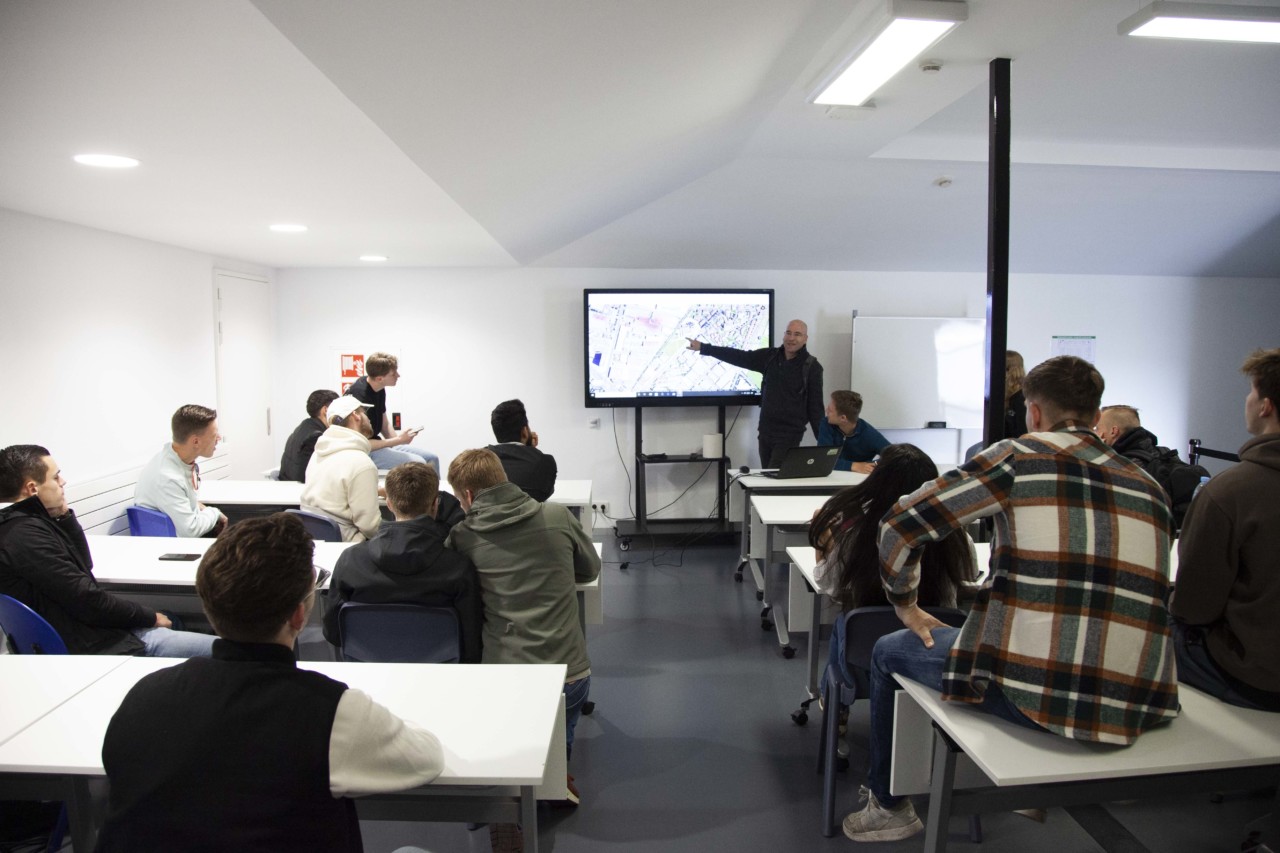
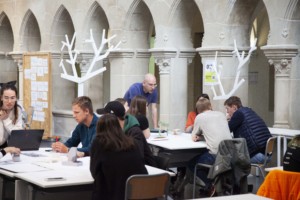
In class, we’ve started exploring the topic of self-employment, and it immediately caught the students’ attention. They know that in the near future they may work as freelancers in the field of design, and all those theoretical aspects we’re discussing could soon become part of their daily lives. While they have a vague idea of what being self-employed means, they’ve never explored the topic in depth. It feels distant, like a faint and muffled sound.

First, they admit they don’t know the exact steps to register as a freelancer, though most mention the Tax Office and Social Security. In class, we’ve analyzed the process of becoming self-employed, the laws that regulate this kind of work, the characteristics of freelance workers, their rights and duties, and their social protection. This is how they discovered that freelancers are not covered by the Workers’ Statute but by the Statute of Self-Employed Workers.

In this context, we also looked into the issue of “false freelancers”—where the fraud originates, how to identify it, and where to turn in such cases. We later used freelance designers as a case study to analyze the pros and cons of self-employment. Students quickly recognized the many advantages: the ability to work from anywhere, the potential for more free time if well organized, flexible schedules, and access to their own client base. At the same time, they understood that these advantages can quickly turn into drawbacks if not managed properly. Flexible hours, for instance, can be a double-edged sword if they procrastinate and deadlines pile up.

They also acknowledged that working as a freelance designer requires great discipline and organization, and that working from home can be full of distractions (phones, too many trips to the kitchen…). They are aware that limited social interaction can become an issue, income instability might knock at the door more often than expected, and loneliness or isolation may be barriers to overcome.

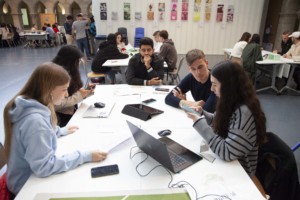
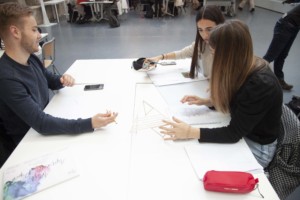
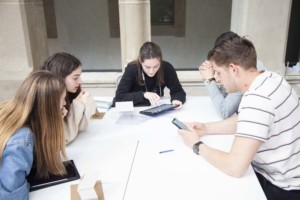
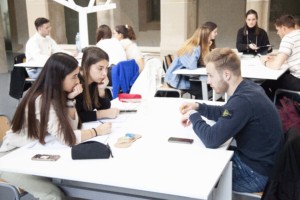
After reflecting on all of this, we went one step further: the students became freelance designers for a day. They created a fictional business and logo, decided what kind of services they would offer, and identified potential clients. They even developed a mock budget to estimate potential investments and earnings. In short, they stepped into the shoes of self-employed designers and analyzed the strengths and challenges of facing a real-life scenario.

We also began working with budgets and invoices, discussing their similarities and differences. Ultimately, beyond the creative side of being a designer, it’s essential they understand the basics of managing their work. This broader knowledge will help them make informed decisions about their future and become more familiar with every aspect of the profession.

Sprint Errónea plan estratégikoa

Sprint Erronka 2025: Creativity and Collaboration Shaping the New IDarte

Posted in Lectures, conferences and workshops, Sin categoría

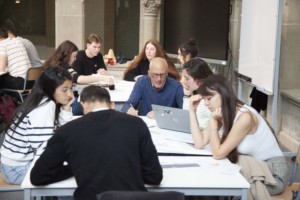
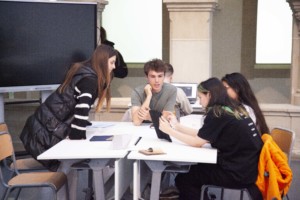
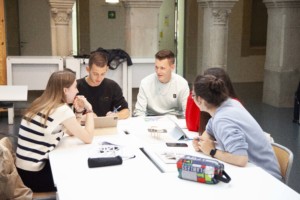
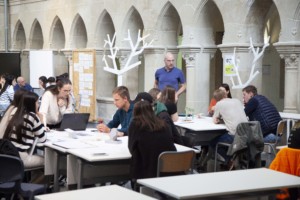
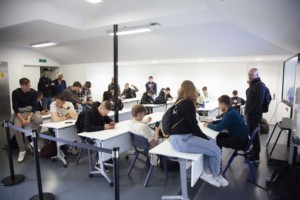
We have just wrapped up the Sprint Erronka Challenge, and once again our students have shown boundless energy and creativity. Their involvement has been truly exemplary: teamwork, a positive atmosphere, and enthusiasm have set the pace throughout these intense days.

The essence of this challenge was not only about transdisciplinary collaboration or the application of the design thinking methodology. This year, Sprint Erronka has also been an opportunity to give a face to the strategic process that IDarte is beginning—defining its image, claim, and communication space. In this sense, the challenge marks the starting point for shaping the IDarte we all dream of.

Our students made the most of transdisciplinarity, combining knowledge and perspectives from different fields, co-creating ideas, and delivering innovative results. The pace was fast, but the good vibes, energy, and creativity never faded.

Along the way, we gathered valuable feedback and had the chance to listen to both students and teachers, which will make next year’s experience even richer. Sprint Erronka reminds us that learning is not limited to academic content: true value also lies in collaboration, communication, and shared creativity.

Sprint Erronka 2025: ametsetako IDarte Eskola

Our warmest thanks go to the teachers and IDarte staff who made this challenge possible. And, of course, to our students. With your energy and enthusiasm, you have taken the first step toward building the IDarte we all dream of.

Alumnado de diseño de interiores en la exposición en Amarilla

Sei zentzu(men): short challenges in two hours

Posted in Lectures, conferences and workshops, News, News EN, Sin categoría

The 4th-year Interior Design students presented the project Sei zentzu(men), developed as part of the course Projects II. The project was featured in the group exhibition #Gerra eta denbora: decrecimiento, held at Sala Amárica.

On March 12, students gave a public presentation of their proposals in the exhibition space, revealing the results of a series of fast, conceptual exercises completed within a limited timeframe: two hours per challenge.

Educational event design based on “the sins and the virtues”

Trabajo realizado por Carolina García De la Torre
Trabajo realizado por Xabier Ogueta con la ayuda de Naia Ibañez de Garaio

In the face of outbreak of war, we made a new proposal.
How can we raise awareness among hypothetical exhibition visitors of their real participation in a more or less distant armed conflict—such as the war in Ukraine?

To what extent are we all involved, knowingly or not, in the ongoing struggle between powers?

In the face of the outbreak of war, we made a new proposal. How can we raise awareness among hypothetical exhibition visitors of their real participation in a more or less distant armed conflict, such as the war in Ukraine?

To what extent are we all involved, knowingly or not, in the ongoing struggle between powers?

Visitors are asked to write their opinion about war. By pinning their thoughts onto a panel, the pushpins pierce through the surface and damage printed images of war victims on the back, causing blood-like stains to appear. This act makes us confront the banality and superficiality of our opinions in the face of something as unimaginable and unbearable as war itself.

Work created by Carolina García de la Torre

Inside one room, situations resembling war unfold. In the next room, the walls are dark and opaque. But thanks to technology, the shadow of a visitor makes those walls transparent. The shadows projected by visitors reveal the harshness of a reality we don’t want, or can’t bear, to see.

Work created by Clara Sarobe

Visitors look through two holes. Reflected in a mirror, they see their own eyes becoming part of a character within a somewhat idealized war-related situation. In the next panel, the reflection places the viewer in the real consequences of war.

Work created by  Edurne Ponce

A person attends an event designed to raise awareness about artificial intelligence, only to discover that they are the protagonist. A video, in which they never participated, presents a realistic clone of themselves as the content of the exhibition.

Work created by Carolina García de la Torre and Nerea Castaño using AI


Darteko ikaslea kolodioi hezearen teknika lantzen argazkigintza historikoko tailerrean.

Wet Collodion and Daguerreotype Workshop with Jon Andoni at IDarte

Posted in Lectures, conferences and workshops, News EN

At IDarte, we love exploring the history of photography and offering unique experiences to our students. That’s why we were lucky to have Jon Andoni Martin, a true master of ancient techniques, guide us through the fascinating world of wet collodion and daguerreotype. These two 19th-century processes are mastered by very few people today.

It’s not every day that you get the chance to experiment with these techniques, as they require specific materials, great precision, and highly specialized knowledge. However, this two-day workshop allowed our photography students to explore these processes up close and experience photography in a completely different way.

On the first day, they worked with wet collodion, a technique from 1851 that requires speed and accuracy. From preparing the emulsion to developing images on glass or metal plates, the students experimented with this process and created portraits with a unique character and stunning aesthetics.

On the second day, they traveled even further back in time with daguerreotype, the first commercial photographic method. They worked with silver-plated copper plates and iodine and mercury vapors to create images with spectacular sharpness and a distinctive shine that makes them look like tiny windows to the past.

This workshop was an unforgettable experience. In a world dominated by digital photography, discovering the patience and artistry required for these processes makes us appreciate photography even more as a form of artistic expression. Thank you to Jon Andoni for sharing his knowledge and passion, and to our students for diving into this adventure with enthusiasm.

Dagerrotipoaren errebelatze prozesua IDarteko tailerrean, bere distira espezifikoarekin
Wet collodion portrait created by an IDarte student, showcasing its unique and timeless aesthetics
IDarte student applying wet collodion on a plate during the historical photography workshop.
Placa de daguerrotipo capturando una imagen con su brillo característico en el taller de IDarte.
Daguerreotype plate capturing an image with its characteristic shine during the IDarte workshop
Jon Andoni Martin explaining the daguerreotype process to IDarte students during the workshop

IDarte Teachers Train in CNC Cutting for Artistic Projects

Posted in Lectures, conferences and workshops, News, News EN

This week, several of our teachers have received specialized training in using the CNC wood-cutting machine, a technological tool that opens up endless possibilities for artistic and design projects. IDarte has a workshop equipped with professional-grade machines, allowing our students to bring their creative visions to life in innovative ways. This in-house training marks a significant step in modernizing our teaching methodologies and integrating new technologies into the classroom.

Teacher training in CNC machine operation is essential, as it not only helps them understand its functions and applications but also enables them to better guide students in executing their projects. With well-trained instructors, we ensure the safe and effective use of CNC technology, maximizing its potential for developing both technical and creative skills.

The CNC cutting machine offers millimeter precision on materials like wood, making it ideal for creating artworks, furniture, stage designs, models, and custom pieces. Additionally, it allows students to familiarize themselves with tools commonly used in creative and manufacturing industries, better preparing them for their professional futures.

At IDarte, we remain committed to innovation and the growth of our educational community by integrating advanced technologies into our arts and design programs.

IDarte teachers practicing CNC wood-cutting techniques in the workshop.
Monstruo Rosa libro

Apila Ediciones visits IDarte with its travelling exhibition and a talk-workshop

Posted in Exhibitions and publications, Lectures, conferences and workshops, News, News EN

For the next two weeks, until 7 February, we will host an exhibition created by the publishing house Apila, titled “APILA PRIMERA EDICIÓN”. This exhibition, displayed in the showcase at the entrance of the school, features the winners of the Apila First Printing Award, which has been held annually since 2013. If you visit with a teacher, you’ll have the opportunity to browse the books on site.

Additionally, on 7 February at 10:15 am, Edu Flores and Raquel Garrido will join us as part of the IDarte Fest to give a talk-workshop titled “Illustrating, designing, and publishing a picture book.”

Founded in 2007, Apila Ediciones has published over 100 illustrated books. One of its primary goals is to promote and showcase the work of emerging illustrators. From this mission, the idea for the Apila First Printing Award was born in 2013, aimed at recognizing the best children’s book by a new illustrator. This award seeks to provide a platform for emerging artists as they enter the competitive world of professional illustration, offering them the opportunity to see their work published. The prize involves publishing a picture book open to illustrators of any nationality, provided they haven’t previously published work in this genre.

Since its inception, the Apila First Printing Award has grown in prestige, becoming an international benchmark for young, aspiring illustrators. If you’d like to participate in the 2025 competition (submission deadline: 16 February), you can find more information at the following link:
Premio Apila Primera impresión 2025 Award

We encourage you to visit the exhibition and join the talk-workshop with Edu and Raquel!

MONEDITA
ilustrazioak
El señor Melchor odia a los perros liburua
And Arthur Waits liburua
iF Design Award

iF Design Student Award will take place in Bilbao in June 2025

Posted in Lectures, conferences and workshops, News, News EN

The iF Design Student Award 2025 event will be held in Bilbao next June at the Guggenheim Museum. Organised by EIDE and iF Design, the event will bring together 300 students from 20 countries during the awards ceremony in Bilbao. In fact, there will be several talks and workshops during these days.

Every year, around 10,000 people submit their projects to this contest, where the main focus of all the proposals is the Sustainable Development Goals. In addition, this year, one of our IDarte teachers, Iker Etxaburu, will be part of the jury for these awards.

Below, you will find two links where you will find the conditions to participate in the iF Design Student Awards.

iF Design Student Award

Terms and conditions of entries

  • · Who can participate?
  • If you are a student or recent graduate.
  • · What do I have to submit?
  • A one-page DinA1 digital poster presenting the project (Attention! Check the requirements in our profile).
  • · What kind of project does it have to be?
  • A project related to the SDGs and design.

What are you waiting for? 5 February is the closing date for entries!

if design 2025
if design event
If design jury
Alumnado de Alfa-college de Groningen de visita en IDarte

Workshop-Consulting with our Dutch Friends 

Posted in Lectures, conferences and workshops

Today, May 15, 2023, we have been visited by students from Alfa-college in Groningen, and their teachers, Rink van Dijk and Bert Huitsing. 

They have participated in a collaborative workshop, helping the students of Projects and Construction of the second year of Interior Design to develop our Aterpe Project in the garden just beside our School in Betoño.

We have called it Workshop-Consulting

Of course, we have taken a break to have a picnic precisely in the same place where we are developing our project.

IDarte logo
Privacy Overview

This website uses cookies so that we can provide you with the best user experience possible. Cookie information is stored in your browser and performs functions such as recognising you when you return to our website and helping our team to understand which sections of the website you find most interesting and useful.